
May Concert 2026
Sunday MAY 3, 2026 | 4:30 pm
Monday MAY 4, 2026 | 7:00 pm
artists:
Program:
Five Yiddish Songs…………… ………………………………………...…………………………….……..…………..….Traditional
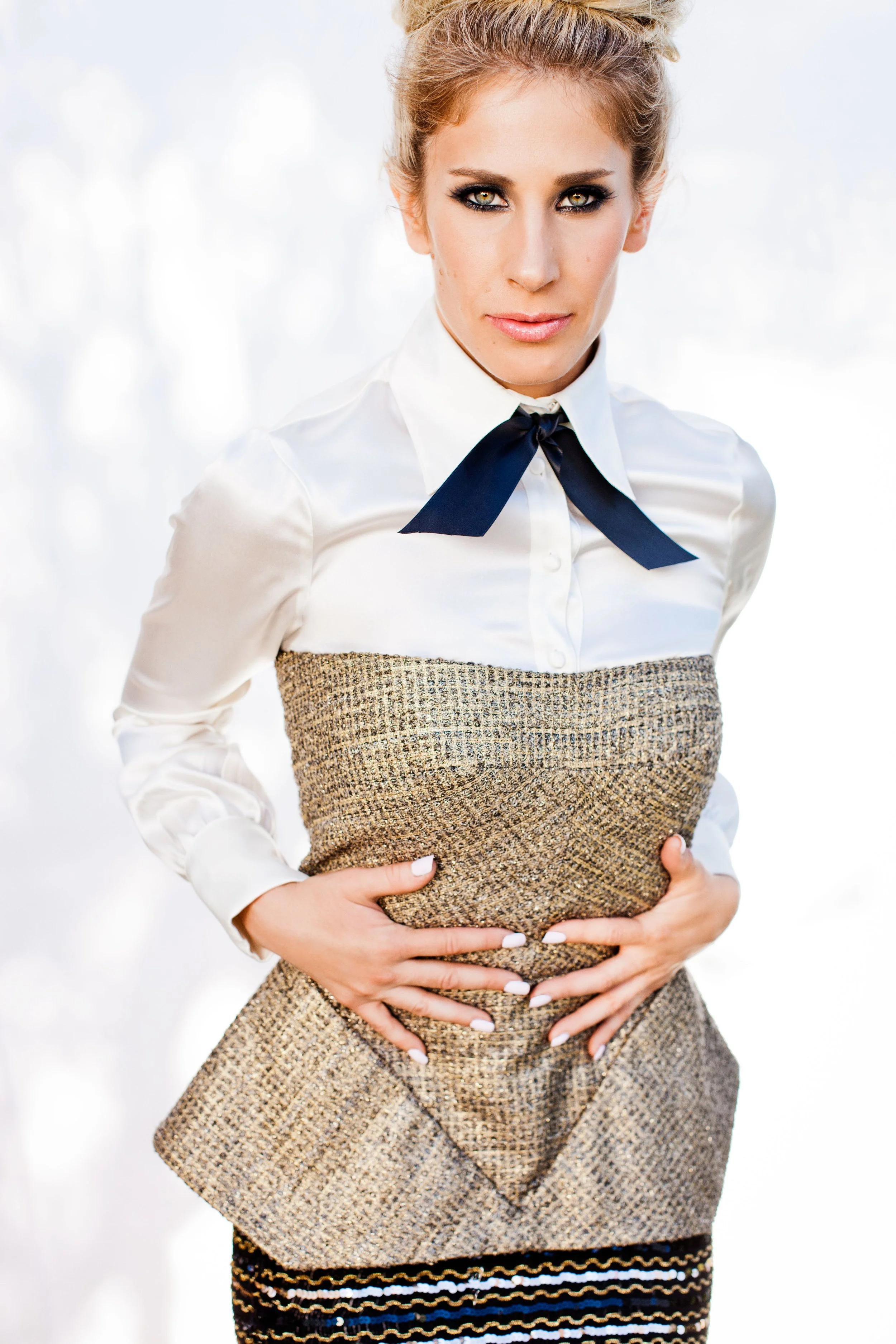
Five Yiddish Songs arranged for Soprano, Clarinet and Piano opens our program. These varied and enchanting traditional songs, sung in Hebrew by the fabulous Hilá Plitmann, might get stuck in your head. Enjoy!
Spell of Safekeeping……………….…………………………………...………………………………………………Kathryn Mishell
Woman to Lover
Spell to Bring Lost Creatures Home
Kathryn Mishell’s Spell of Safekeeping, Woman to Lover and Spell to Bring Lost Creatures Home were composed in 1961, when the composer was a college student. They are settings of poems by Kathleen Raine.
Arabesque—for Clarinet and Piano………………………………………………..…………………….….……Germaine Tailleferre
The only female member of Les Six—the circle of French composers that included Poulenc, Milhaud, and Honegger—Germaine Tailleferre cultivated a style that was elegant, witty, and rooted in clarity of line. Her music often shows the influence of French neoclassicism, with graceful melodies and sparkling textures, yet always carries her distinctive touch of charm and lightness.
Composed in 1973, the Arabesque for clarinet and piano is a late work that exemplifies her enduring stylistic traits. The title recalls the decorative “arabesque” figures in visual art and design, and Tailleferre’s music responds in kind with flowing, ornamental melodic lines for the clarinet. The piano provides nimble support, weaving rhythmic vitality with harmonic clarity.
Though modest in scale, the piece captures Tailleferre’s gift for refinement and expressive economy. It is playful yet poised, lyrical yet concise—an elegant miniature that reflects the freshness she maintained throughout her long career.
Selected songs……………..……………………………………………..…………………….….…..…. Robert and Clara Schumann
Both Robert and Clara were writing songs during their marriage that they would show to each other and share with friends and audiences. The songs in our selection illuminate the individuality of each composer’s voice while also reflecting the deep artistic partnership at the heart of their marriage.
Dialogue………………….…………………………………………..……..….………….…………………………Kathryn Mishell
Newly composed for singer and actress Hilá Plittman, this work for soprano, clarinet and piano has her portray a dialogue between two characters: Dread and Hope.
Elegia Op. 10, III—for Clarinet and Piano……………………………………………………..……………..….…Ferruccio Busoni
Ferruccio Busoni (1866–1924) is remembered today chiefly as a visionary pianist, pedagogue, and forward-looking composer who bridged the Romantic and modern eras. Yet his earliest works reveal the remarkable precocity of a teenage prodigy. Busoni composed his Elegie, Op. 10, No. 3, in 1881 when he was only fifteen years old, dedicating it to his friend, the clarinetist Hans Demar.
Despite his youth, Busoni already demonstrates a deep sense of lyricism and expressive intensity. The clarinet sings in long, yearning phrases, while the piano provides both harmonic support and dramatic commentary. The mood is one of Romantic melancholy, closer in spirit to Brahms or Schumann than to the bold modernist Busoni would later become.
As part of his Op. 10 set of chamber works, the Elegie shows Busoni’s early mastery of instrumental color and his sensitivity to the clarinet’s vocal qualities. Though a youthful work, it has earned a place in the clarinet repertoire as a brief but deeply expressive miniature.
I Never Saw Another Butterfly—for Voice and Clarinet……………………………………………………………..…Lori Laitman
ii. Yes, That’s The Way Things Are
iii. Birdsong
iv. The Garden
One of America’s foremost composers of art song, Lori Laitman has built a reputation for music of lyrical beauty and emotional depth. Her cycle I Never Saw Another Butterfly sets poems written by children in the Terezín concentration camp during World War II. The six songs capture moments of innocence, longing, and courage amid tragedy. Laitman’s clear tonal language and sensitive text setting give poignant voice to these young poets, with clarinet adding color and emotional resonance. The result is a haunting tribute to resilience and the enduring power of art.
Austin composers’ songs set:
When God Lets My Body Be…..…………………………………………………………………………….……..……Dan Welcher
Try Me………………………………………………………………………………………………………….…………Sam Lipman
With the composer at the piano
Vespers………………………………………………………………………………………………………….…….. Sophie Mathieu
We are happy to put together a group of songs by four esteemed Austin composers.
The Shepherd on the Rock, Op. 129 ………………………………………………………..…………………………Franz Schubert
Der Hirt auf dem Felsen (“The Shepherd on the Rock”) by Franz Schubert was composed in the final months of his life in 1828 and stands as one of his last and most transcendent works. Written for the celebrated soprano Anna Milder-Hauptmann, who requested a piece combining lyrical song with virtuosic display, the work bridges Schubert’s lieder style and the concert aria. The text combines verses by Wilhelm Müller and Karl August Varnhagen von Ense, expressing the thoughts of a shepherd who sings of solitude, longing, and hope for reunion. The clarinet functions as both partner and echo to the voice, its warm timbre blending seamlessly with the soprano’s line.
Structured in three sections, the piece moves from introspective melancholy to pastoral reverie and finally to radiant optimism. The opening conveys loneliness across a vast alpine landscape; the middle section, set in a flowing major key, expresses tender yearning; and the brilliant final section bursts forth in a joyful anticipation of spring and renewal. Written just months before Schubert’s death, the work is both farewell and celebration—a luminous expression of beauty and renewal.